
How Property Line Disputes Between Neighbors Usually Get Settled
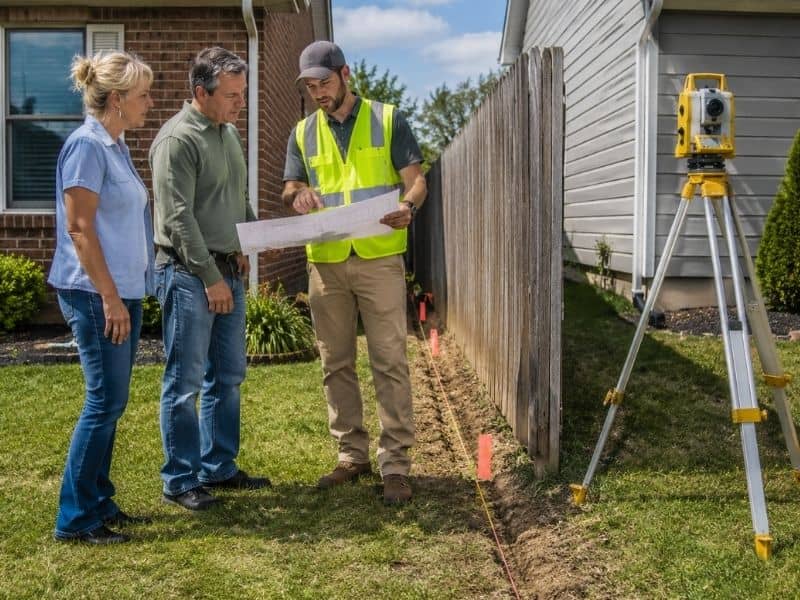
Few things create tension between neighbors faster than a disagreement over where one property ends and another begins. Whether the issue involves a fence, a driveway, or a structure that crossed the line, disputes can escalate quickly if not handled correctly.
Most property line disputes can be resolved without going to court. The key is knowing the right steps and acting on them early.
What Causes Property Line Disputes?
Most boundary disputes come down to one of a few common situations.
Unclear deed descriptions. Older deeds often use vague language to describe boundaries. Phrases like “along the old fence line” or “to the large oak tree” leave room for interpretation, especially when the fence is gone or the tree no longer exists.
Missing or moved survey monuments. Physical corner markers such as iron pins or concrete posts can be removed during construction, buried over time, or shifted accidentally. When markers are missing, both neighbors may have different ideas about where the line falls.
Assumptions based on existing features. Fences, hedges, and landscaping are often treated as property lines, but they are not always in the right place. A fence installed decades ago may have been placed incorrectly from the start.
Errors in recorded documents. Mistakes in deeds, plats, or subdivision maps do occur. When two neighboring deeds overlap or leave a gap, disputes are almost inevitable.
Signs You May Have a Boundary Problem
Not every boundary issue starts with a heated argument. Watch for these warning signs:
- A neighbor builds a fence, shed, or addition that appears to cross onto your land
- You receive a notice from a contractor or surveyor working on the property next door
- A title search during a sale reveals conflicting boundary descriptions
- You and your neighbor disagree about where a shared driveway or walkway belongs
- Someone is regularly using a portion of your land without permission
If any of these situations apply, it is worth taking action sooner rather than later.
Step 1: Review Your Deed and Plat Map
Before approaching your neighbor or calling anyone else, start with your own documents. Pull out your property deed and your recorded plat map. These are public records available at your county recorder or assessor’s office.
Read through the legal description of your property. It will describe your boundary using measurements, directions, and reference points. Knowing what your documents say is an essential first step.
Step 2: Have a Calm Conversation With Your Neighbor
In many cases, boundary issues are the result of a genuine misunderstanding rather than bad intentions. Your neighbor may have no idea that their fence or addition is in the wrong place.
Before things become formal, try a direct and respectful conversation. Share what your deed says and ask if they have their own documents to compare. You may find that both of you are working from different assumptions, and a simple discussion can open the door to a cooperative solution.
Step 3: Hire a Licensed Land Surveyor
This is the most important step in resolving any boundary dispute. A licensed professional land surveyor will research the deed history of both properties, locate or re-establish physical corner markers, and produce a legally recognized map showing the true boundary line.
A survey removes the guesswork. Instead of two neighbors arguing based on assumptions, you have an official document based on recorded deeds. In most cases, one party accepts the findings and the matter is resolved. Even when both neighbors share the cost, a survey is far less expensive than a legal dispute.
Step 4: Attempt a Negotiated Agreement
If the survey confirms a boundary that one neighbor disagrees with, a negotiated agreement is often the next practical option. This could take the form of:
- A boundary line agreement, where both parties formally agree to accept a specific line, recorded with the county
- A quitclaim deed, where one party transfers any claim to a disputed strip of land to the other
- A license or permission agreement, which allows one party to use a portion of land under agreed-upon terms
These agreements should always be put in writing and recorded with the county. An attorney can help draft the appropriate documents.
Step 5: Consult a Real Estate Attorney
If the dispute cannot be resolved through conversation or negotiation, it is time to involve a real estate attorney. An attorney can review the survey, assess your options, and help you pursue a formal resolution.
In some cases, this may lead to a court action known as a quiet title suit, where a judge reviews the evidence and issues a ruling that legally establishes the boundary. This is typically a last resort, but when a neighbor refuses to accept a survey’s findings or has clearly encroached on your land, legal action may be necessary.
How to Prevent Future Disputes
Once your boundary is resolved, take steps to protect yourself going forward.
- Make sure your corner monuments are visible and in place
- Record any boundary agreements with your county
- Keep copies of your survey, deed, and signed agreements in a safe place
- Confirm the boundary before building anything near a property line in the future
Frequently Asked Questions
What if my neighbor refuses to accept the survey results?
You may need to consult a real estate attorney. In serious cases, a court can issue a ruling based on the survey and deed evidence.
Can a fence determine a property line legally?
Not on its own. A fence is not legal evidence of a boundary. However, if a fence has been treated as the line by both parties for many years, it may become relevant in a legal dispute. An attorney can explain how this applies in your state.
What is adverse possession?
Adverse possession is a legal concept that allows someone to claim ownership of land they have openly used for a set number of years, even without permission. Rules vary by state. If someone has been using part of your property without your knowledge, consult an attorney to understand your options.